Finsa Bikaneri papad
Six steps

Whole dal in.
Sealed pouch out.

There is no secret to a papad. There is a sequence, and most of the difference between a good one and a bad one is whether somebody was patient at step four. Here is the whole run, in order.

  • Open sun, not forced heat
  • Rolled by hand
  • Sealed the same week
  1. 01SourcingWhole dal, cleaned
  2. 02GrindingSmall lots, not stockpiled
  3. 03Dough and rollingRO water, weighed spice
  4. 04Sun dryingOpen air, unhurried
  5. 05CheckingColour, snap, thickness
  6. 06PackingSealed and batch marked

The six steps in detail

01 Sourcing

The dal decides everything.

Moong, moth, chana and urad arrive whole. They are cleaned and sorted before anything else happens to them, because a stone or a split husk that gets past this point ends up in a pouch.

Buying ready ground flour would be faster and cheaper. It would also mean trusting somebody else to have done this step properly, on a product where four ingredients means each one is a quarter of the result.

  • Whole pulses, cleaned on arrival
  • Moth dal for bhujia, grown in this region
  • Spices weighed to a fixed recipe, not eyeballed
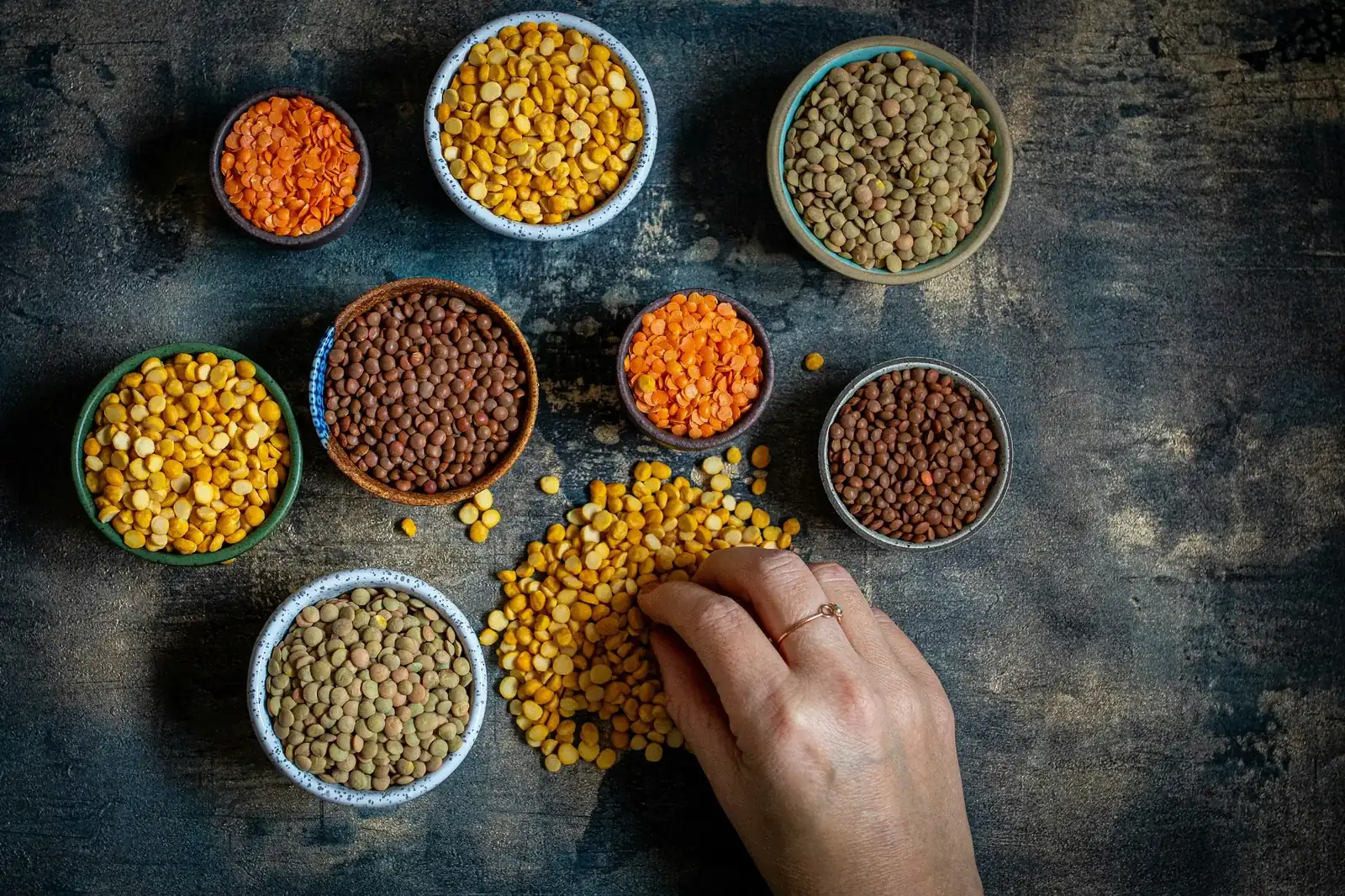
Bowls of whole and split pulses laid out on a dark work surface

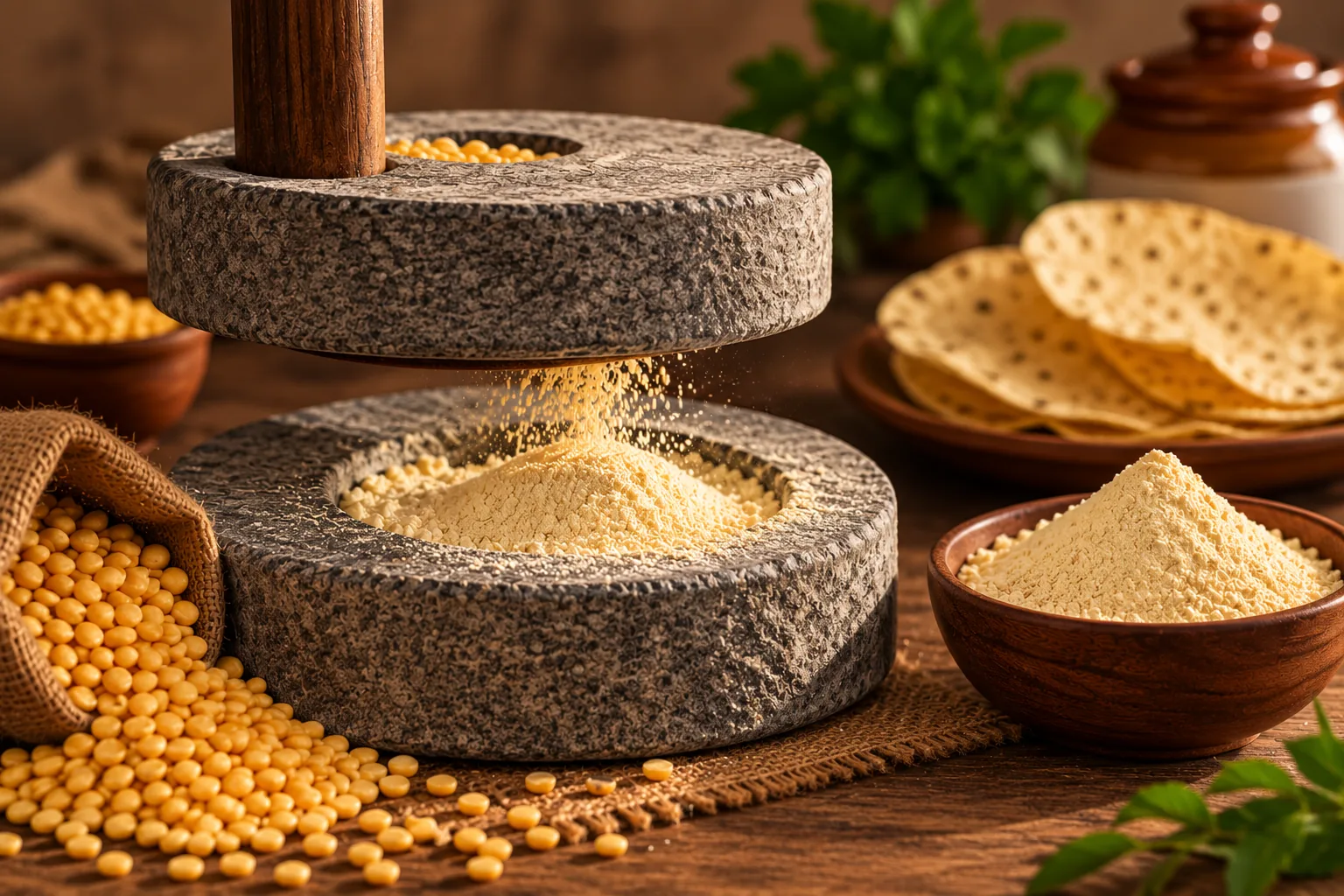
02 Grinding

Ground in lots, not by the tonne.

Dal is ground close to when it is used. Flour that sits picks up moisture and smell, and both of those travel straight into the finished papad.

Working in small lots is slower and it is the reason we can turn a bad batch around at step five instead of finding out about it from a shop three weeks later.

  • Ground in small lots, close to use
  • No long term flour storage
Dal ground down to flour between the stones of a hand mill

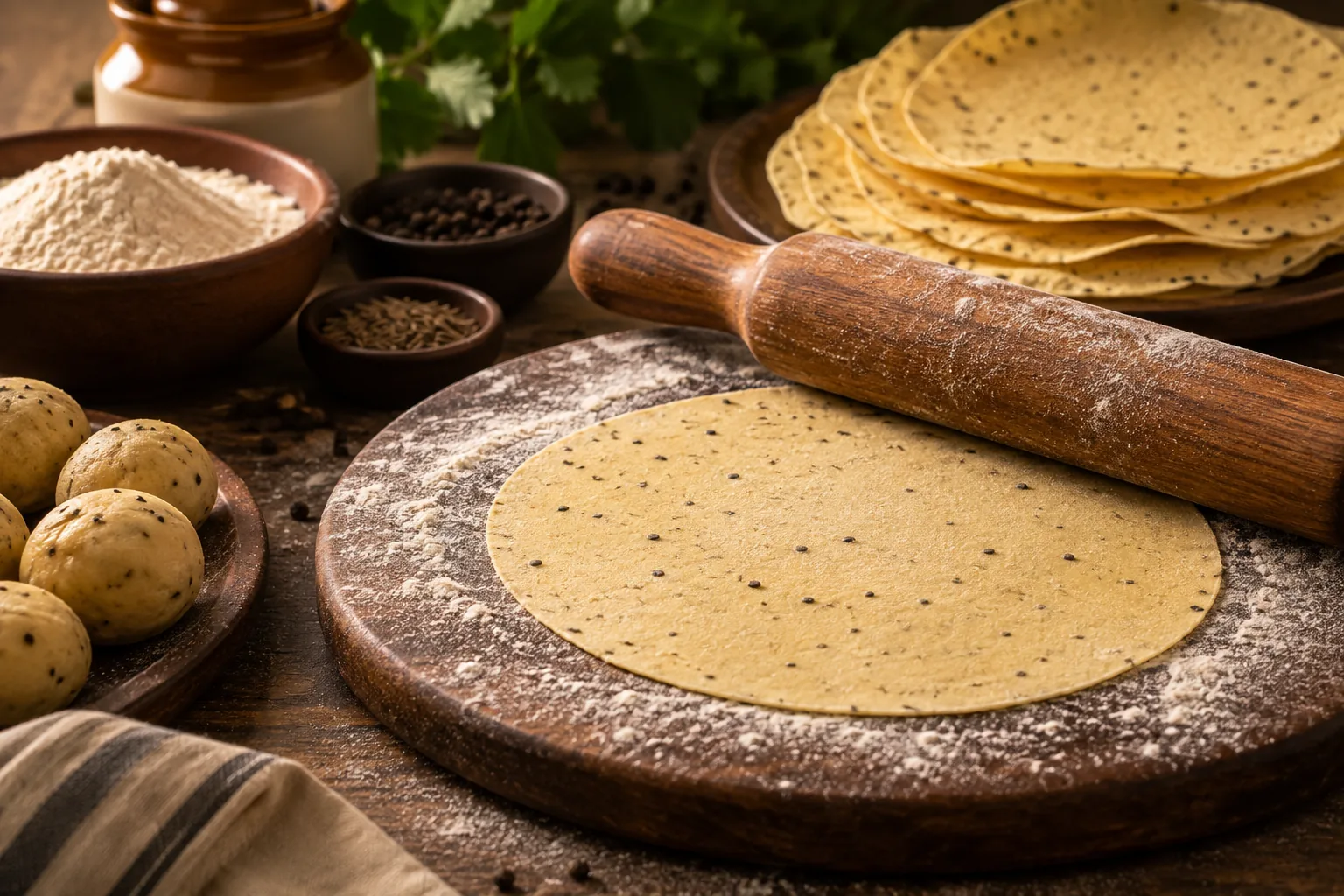
03 Dough and rolling

Water is a third of it.

Flour, salt, spice and water go together into a dough. The water is treated by reverse osmosis first, which is the one part of this step nobody can taste and everybody should be told about.

The dough is then portioned and rolled to an even thickness. Even is the whole job. A round that is thick in the middle and thin at the edge burns at the edge before the middle has done anything at all.

  • Reverse osmosis water into the dough
  • Rolled to an even thickness by hand
  • Badi portioned into nuggets at this stage instead
A papad round rolled out on a floured board, dough balls waiting beside it

04 Sun drying

This is the step you cannot hurry.

Rounds go out into open sun and stay there. Rajasthan does the work. Sun drying is slower than forced heat and it is the reason a papad puffs instead of cracking: it dries evenly, all the way through, rather than sealing on the outside with moisture still trapped in the middle.

It is also the step that sets the season. Drying takes longer in a damp week, so a batch takes longer, and there is no honest way around that.

  • Open sun, no forced heat
  • Dried through, not just on the surface
  • Badi dried hard enough to rattle
Dunes in the Thar desert under a bleached sky

05 Checking

Colour, snap, thickness.

Three checks catch almost everything. Colour tells you about the dal and the drying. Snap tells you whether it dried through. Thickness tells you whether the rolling held up across the batch.

A batch that fails does not get packed. That sounds obvious and it is the only quality system that matters, because everything downstream of a bad batch is just deciding who to blame.

  • Checked before packing, not after a complaint
  • Counted and stacked by variety
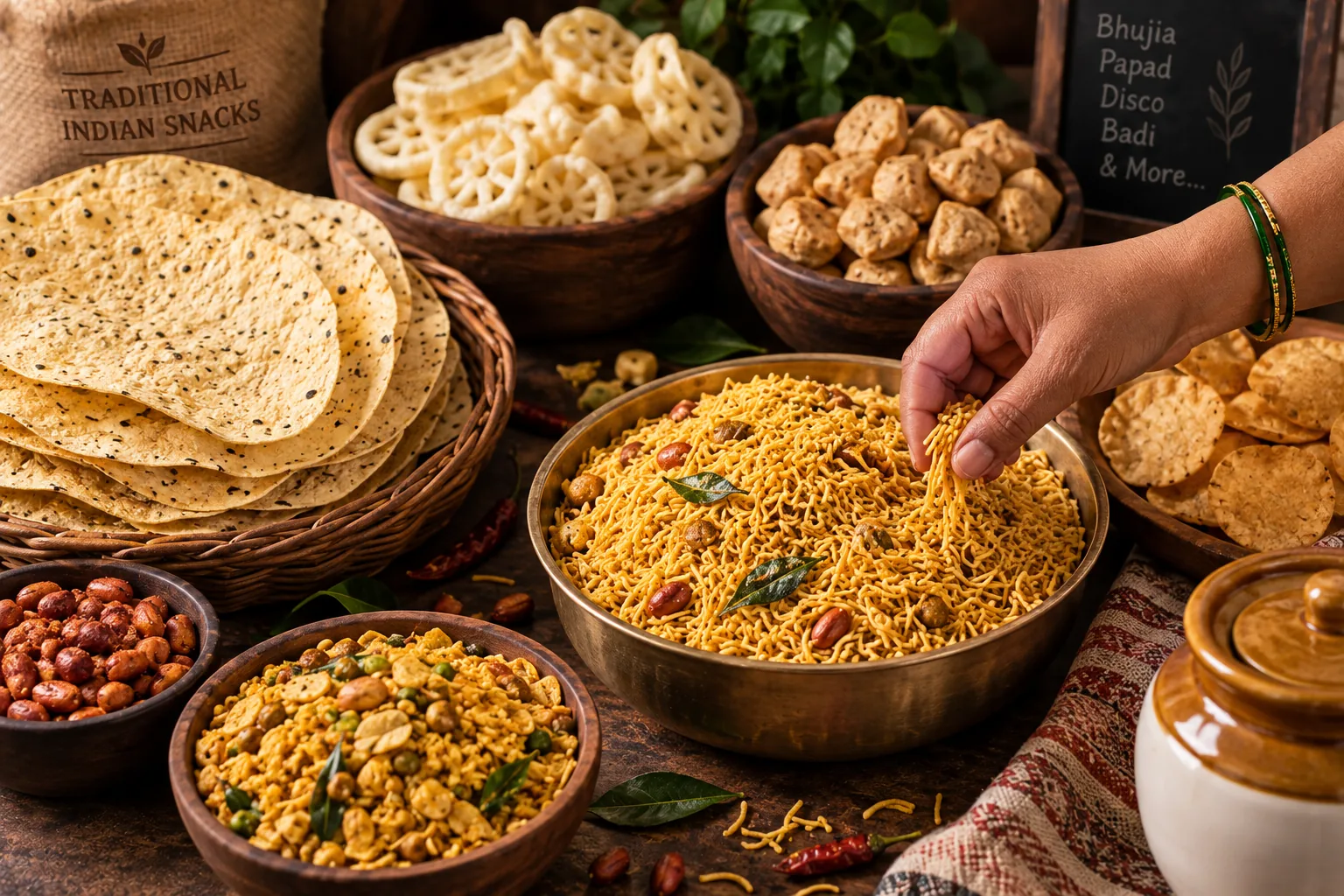
Finished papad, disco, badi and bhujia set out side by side

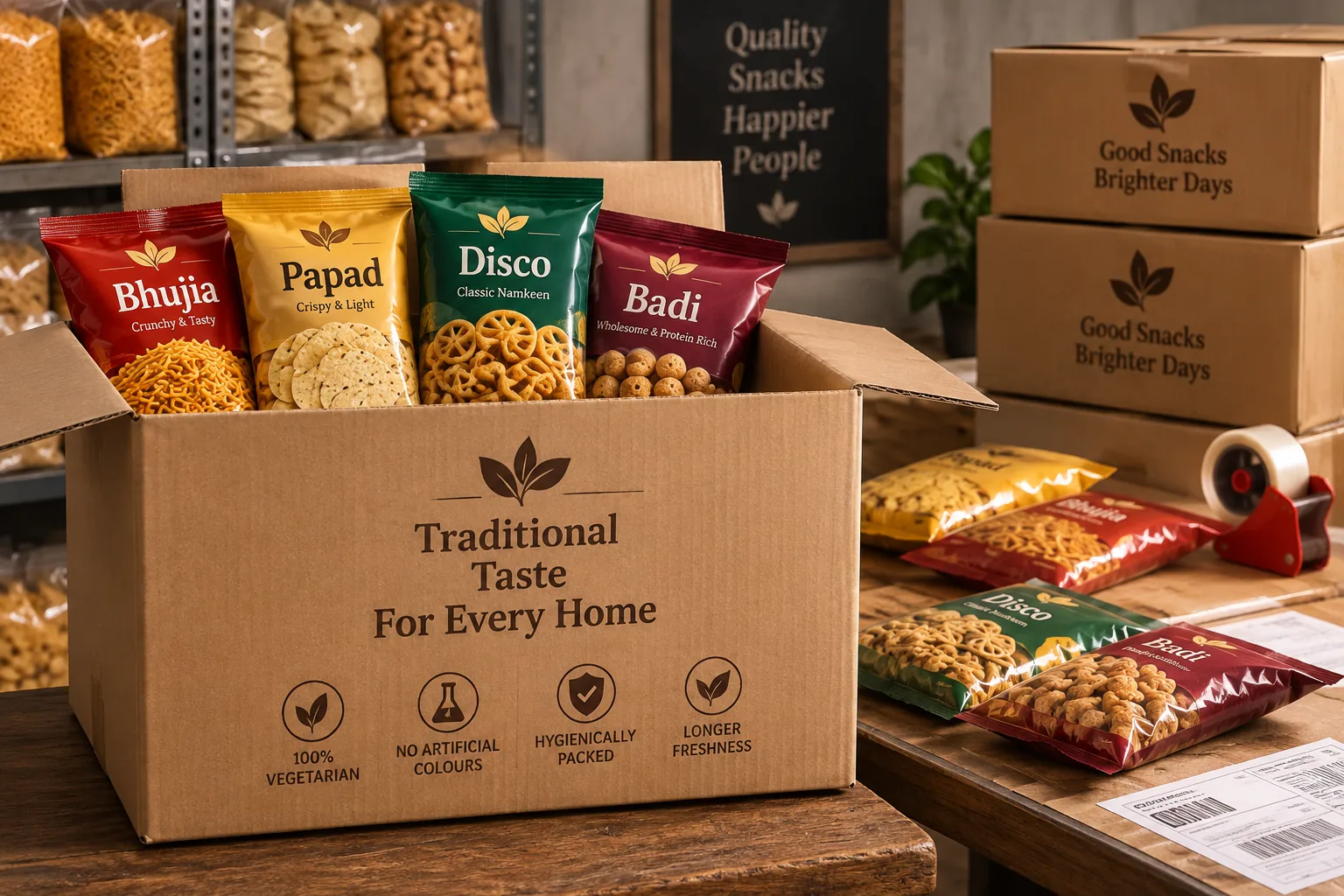
06 Packing

Sealed the same week it is made.

Retail pouches for shop shelves, larger cartons for wholesalers and kitchens. Both carry batch details and the FSSAI mark, so anything that goes wrong can be traced to a day rather than a season.

Then it goes out. Nothing sits in a godown waiting to lose its crunch, which is also why we would rather stage a large order than hold stock against it.

  • Retail pouches and bulk cartons
  • Batch details on every pack
  • Pack sizes quoted per order
Retail pouches packed into a carton, shipping label and tape at hand
And then

It becomes somebody's five o'clock.

The run ends at a counter. A shopkeeper cuts open a carton, a pouch goes on a shelf, and somebody buys it on the way home because there is tea at the other end of the journey.

That is the only part of this we do not control, and it is the part the whole thing is for.

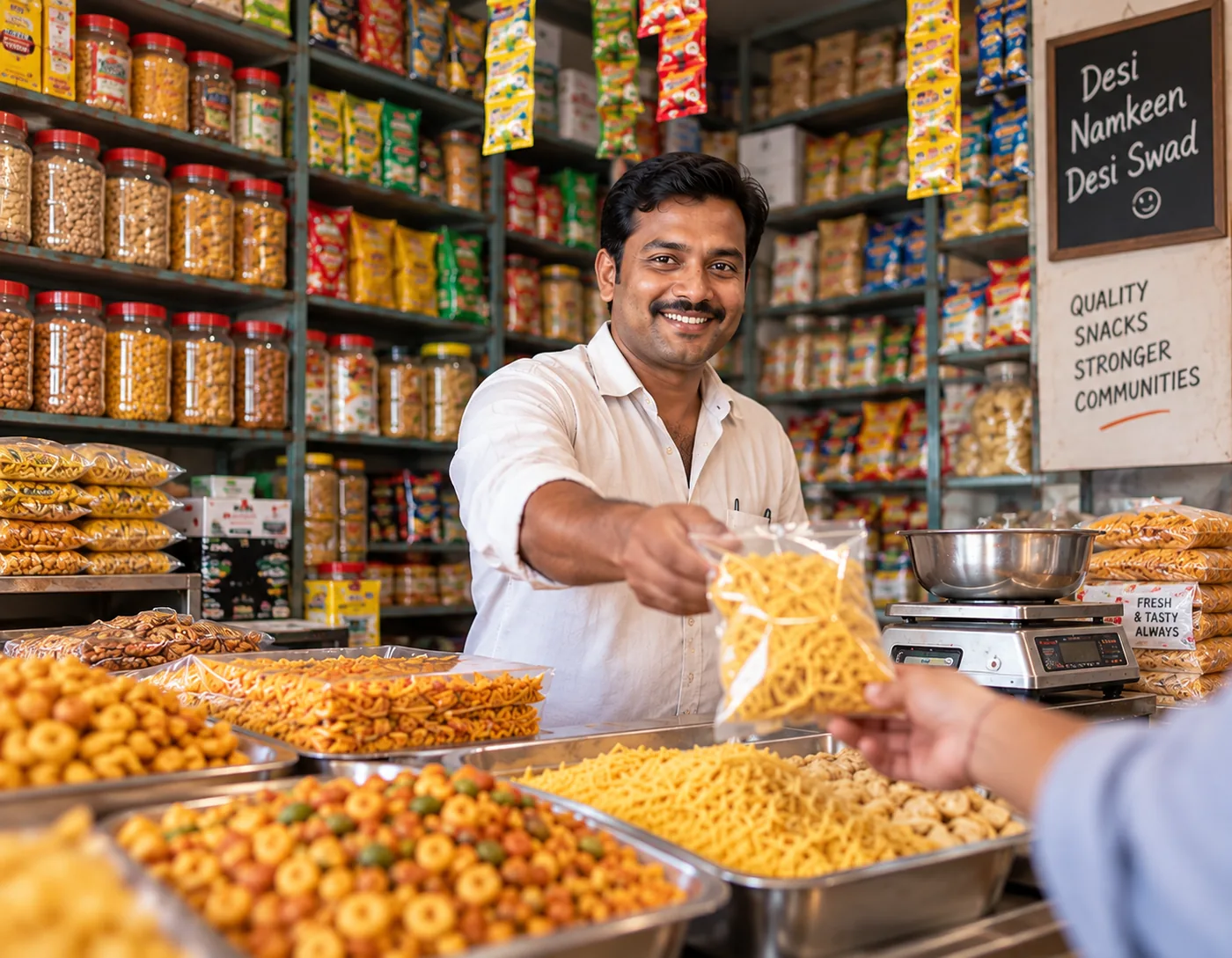
A namkeen counter, trays weighed out and a pouch handed across
Where the run actually ends