
FSSAI certified
We are a licensed food business under the Food Safety and Standards Authority of India. The licence mark is printed on every pack we seal.
The licence number belongs next to this badge. It is being added.
Almost nobody who eats our papad will ever stand in the room it was made in. That asymmetry is the whole problem with food, and the only sensible answer to it is to be specific about what we do and equally specific about what we have not been asked to prove.
Each of these is either a licence we hold or a practice we run. None of them is a marketing word.
We are a licensed food business under the Food Safety and Standards Authority of India. The licence mark is printed on every pack we seal.
The licence number belongs next to this badge. It is being added.

Everything we make is vegetarian, certified as such, with no egg and no animal fat anywhere in the range. There is no separate line, so there is nothing to cross contaminate from.
The falhari mix goes further: no grain, no onion, no garlic.
The water that goes into our papad dough is treated by reverse osmosis before it is used. In a dough of four ingredients, water is one of them, and it is the one nobody thinks about.
Used through production, not only at the end.

A batch is looked at before it is packed, not after a complaint. Colour, snap and thickness are the three that catch almost everything, and a batch that fails them does not go into a pouch.
Batch details are printed on the pack so a problem can be traced.
Written down because a standard nobody wrote down is a preference.
Moong, moth, chana and urad come in whole and are cleaned before they are ever ground. Buying flour instead would be cheaper and faster, and it would mean trusting somebody else's sorting. A papad is four ingredients. There is nowhere for a bad one to hide.
Reverse osmosis water goes into the dough. This is the single most specific hygiene claim we make, and it is specific on purpose: it is the part of the process that a customer cannot taste and has to be told about.
We grind and dry in small lots rather than filling a godown. Papad that sits for a season loses its snap, and bhujia takes on moisture faster than anything else we make. Fresh beats warehoused, so we would rather turn a large order around in stages than sell you something that has been waiting.
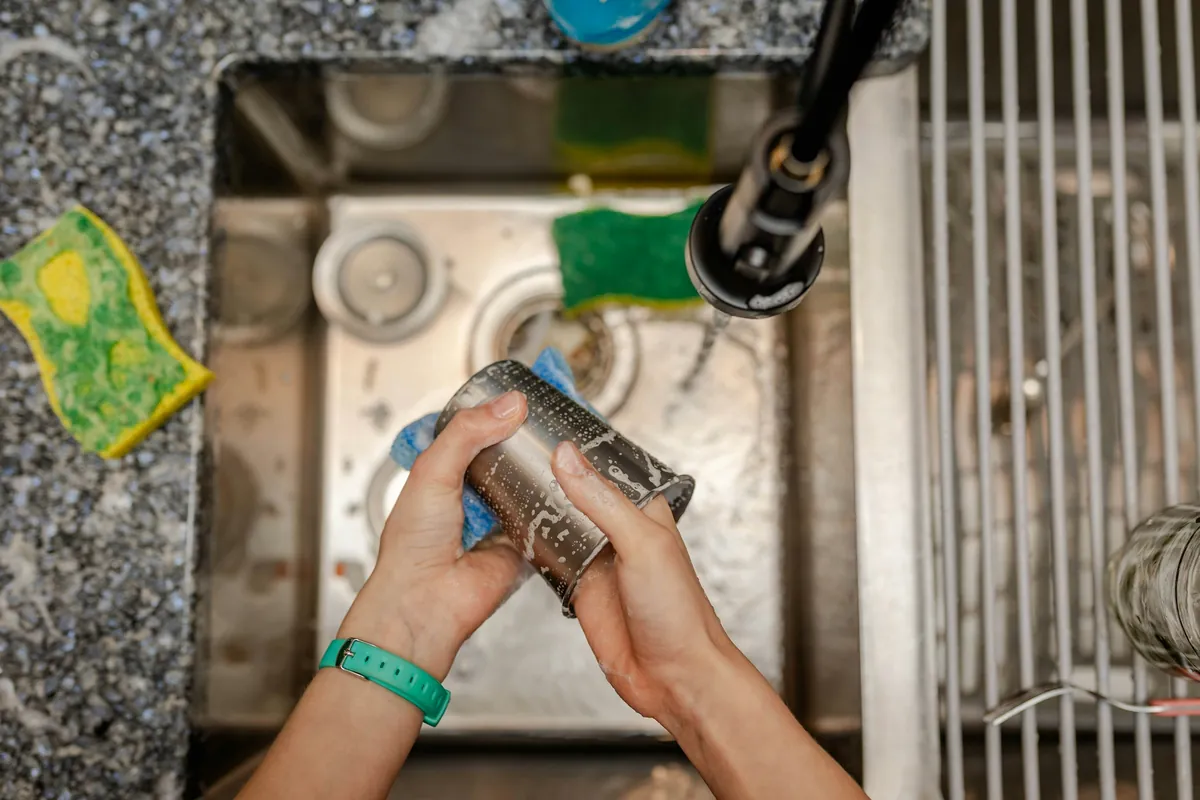
Vessels are scrubbed between batches and surfaces are cleared before the next dough goes down. This is ordinary and it is meant to be. Most food safety is not a machine, it is a habit that somebody keeps up on a day nobody is watching.
A batch that arrives damaged, damp or off is ours to sort out. Call the number at the bottom of this page with the batch code and we will deal with it rather than argue about it.
Dal gets the attention. Spice gets the credit. Water is roughly a third of a papad dough and it is the only ingredient that carries whatever was in the pipe.
Bikaner is a desert city and water here travels a long way before it arrives. Treating it by reverse osmosis before it goes into a dough is not an upgrade, it is the baseline for making food in this part of Rajasthan. We say so specifically because "hygienic" on its own means nothing at all.
A quality page that only lists good news is an advertisement. These are the things we are not going to tell you, and why.
We have not had the range lab tested, so there are no calorie, protein or fat numbers on this website. What is on the pack is what has been declared.
This is fried and salted snack food made well. It is not a health product and we are not going to dress it up as one.
Best before dates are printed per batch on the pack. Publishing a single number for fifteen different products would be a guess.
We hold an FSSAI licence. We do not hold organic certification, and we do not claim one we have not been through.
Every rule above belongs to a step. The process page walks the six of them in order, from a sack of whole dal to a sealed pouch on a counter.
How it is made